Starting a mobile detailing business doesn't mean you need a van packed with expensive equipment.
You need the right tools to deliver the services you plan to offer, without buying machines you won't use.
A beginner offering basic interior cleaning and exterior washing needs a very different setup from someone providing paint correction, deep upholstery cleaning, or fully self-contained mobile detailing.
This mobile detailing equipment list covers the essential tools, estimated costs, optional upgrades, and three starter budgets to help you make smarter buying decisions in 2027.
Mobile Detailing Equipment Checklist: What Do You Actually Need?
For most beginners offering basic interior and exterior detailing, start with a wet/dry vacuum, suitable washing equipment, microfiber towels, brushes, cleaning chemicals, and basic accessories.
A pressure washer is useful but not always mandatory. You may not need a generator, water tank, extractor, or polisher at the start.
Here is a practical breakdown.
| Equipment | Estimated cost (USD) | Priority |
|---|---|---|
| Wet/dry vacuum | $60–$180 | Essential for interiors |
| Electric pressure washer | $100–$250 | Conditional |
| Wash buckets, mitts, and grit-control supplies | $30–$80 | For conventional washing |
| Microfiber towels | $25–$70 | Essential |
| Detailing brushes | $15–$50 | Essential |
| Basic auto detailing chemicals | $60–$150 | Essential |
| Spray bottles and applicators | $15–$40 | Essential |
| Hoses, fittings, and electrical accessories | $30–$120 | As needed |
| Storage and organization | $20–$75 | Recommended |
| Water tank and delivery system | $150–$500+ | Optional |
| Generator | $350–$1,000+ | Optional |
| Carpet extractor | $200–$800+ | Optional |
| Dual-action polisher and accessories | $150–$400+ | Optional |
Cost note: These are illustrative U.S. equipment-planning ranges, not verified forecasts of 2027 pricing. Taxes, shipping, brand selection, and required accessories can substantially change the total.
The key is to purchase a working system rather than checking off every item on a generic list.
Exterior Washing Equipment
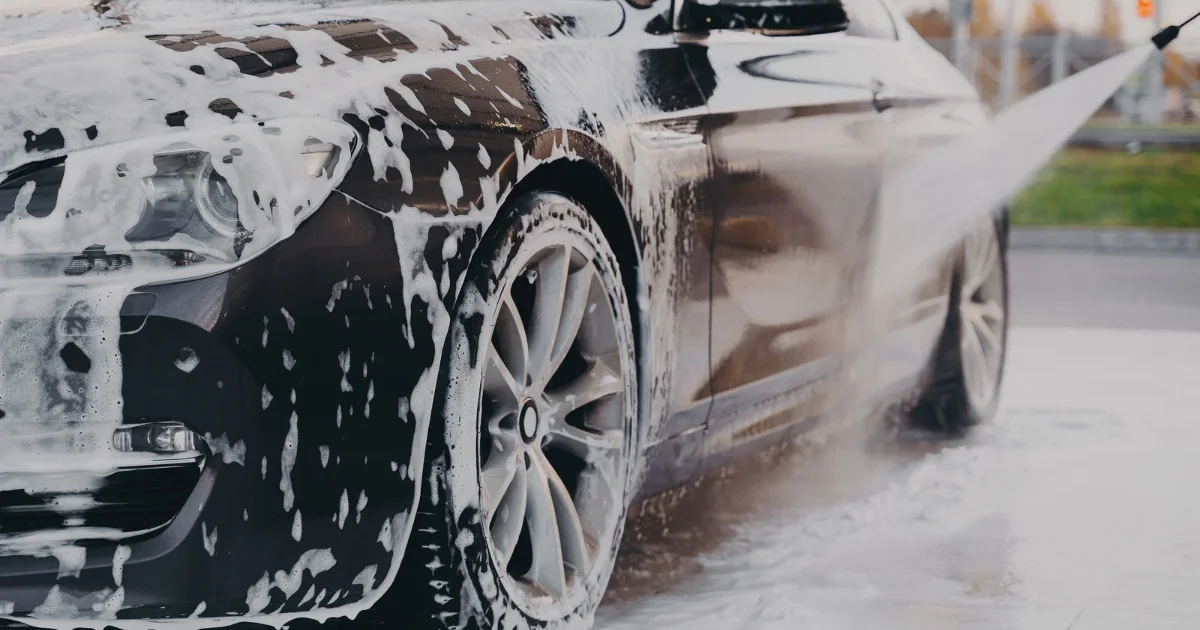
Exterior washing equipment helps you remove dirt, clean wheels, wash painted surfaces, and dry vehicles.
Your exact requirements depend on whether you offer traditional rinsing, pressure-assisted washing, or rinseless detailing.
Electric Pressure Washer
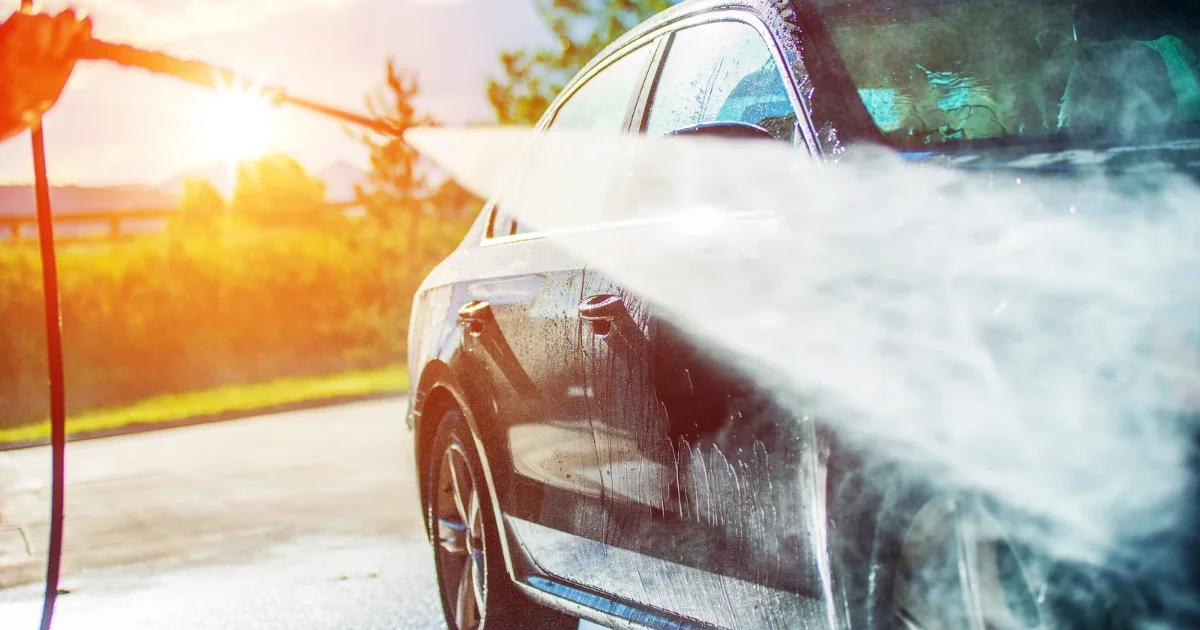
An electric pressure washer is a popular option for beginner mobile detailers because many models are compact and relatively easy to transport.
When comparing models, look beyond the advertised PSI.
- PSI: Water pressure that affects cleaning force.
- GPM: Water flow, which affects rinsing performance and water consumption.
- Power requirements: The outlet and circuit needed to operate the machine.
- Connections: Hose sizes, fittings, and compatibility with accessories.
- Portability: Machine weight and storage space.
A compact electric model may be sufficient for routine exterior detailing. More pressure is not automatically better, especially around damaged paint, seals, trim, or sensitive components.
Estimated planning cost: $100–$250.
Who should skip it? Beginners using a suitable rinseless washing process or another method that doesn't require pressure-assisted rinsing.
What changes the recommendation? Higher workloads, independent power requirements, or a different washing process.
Wash Buckets and Microfiber Mitts
For conventional contact washing, start with suitable wash media, clean buckets, and a way to keep contaminated wash water away from paint.
Two-bucket washing is one established approach, but it's not the only workable method.
Keep wheel-cleaning supplies separate from paint-contact tools to reduce the risk of transferring abrasive dirt.
Microfiber Towels
Microfiber towels are among the most-used supplies in a detailing business.
Rather than buying one large pile of identical towels, separate them by purpose.
| Towel category | Primary use |
|---|---|
| Plush drying towels | Exterior drying |
| Soft paint-safe towels | Product removal and finishing |
| General-purpose towels | Interior wiping |
| Glass towels | Windows and mirrors |
| Dedicated dirty-work towels | Wheels and door jambs |
The goal is to avoid using a towel contaminated with wheel grime on a painted surface.
Replace towels when they're damaged, heavily contaminated, or no longer suitable for their intended use.
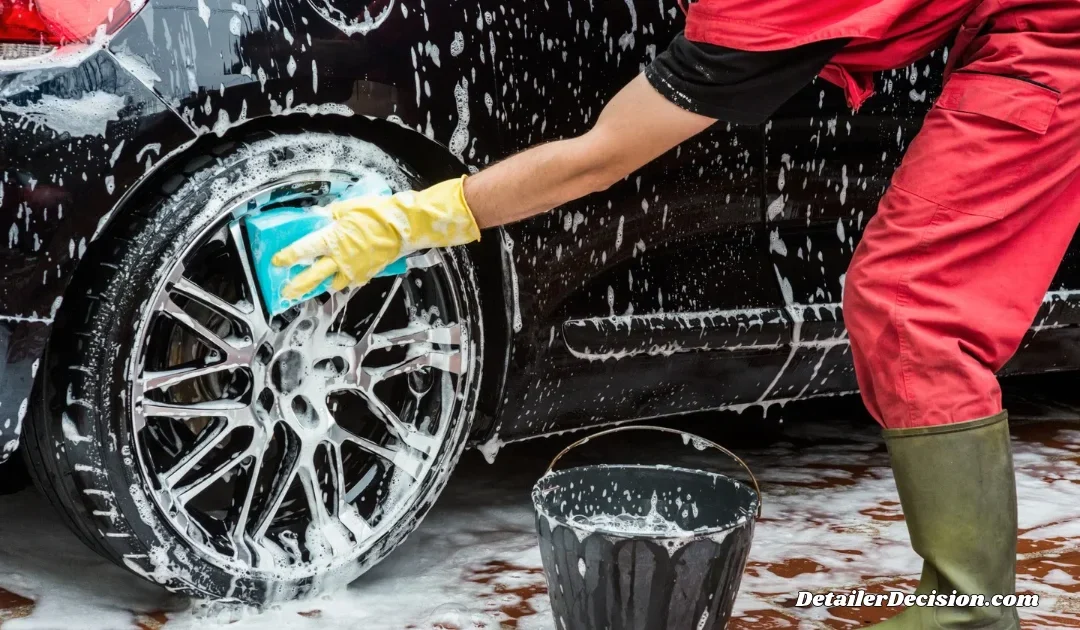
Wheel and Tire Brushes
You don't need a dozen specialized brushes immediately.
Start with a small selection suited to the wheel finishes and tire surfaces you'll be cleaning.
A tire brush, a wheel-face brush, and a smaller detailing brush can cover many routine tasks. Always match brush stiffness and chemicals to the surface.
Ready to Build Your Starter Rig?
Choose your budget, explore essential equipment, and see an estimated setup cost before you buy.
Build My Starter RigInterior Detailing Equipment
Interior cleaning is a practical entry-level service because it doesn't necessarily require a pressure washer, water tank, or large generator.
Wet/Dry Vacuum
A wet/dry vacuum is one of the first machines worth considering if your services include cleaning vehicle interiors.
Look for a model with useful attachments for seats, carpets, floor mats, and tight spaces.
Look for a model with a crevice nozzle, a manageable hose length, adequate tank capacity, and a power requirement compatible with your setup.
Don't choose a vacuum based solely on its advertised horsepower. Usability, suction characteristics, filtration, and accessories also matter.
Estimated planning cost: $60–$180.
Interior Brushes and Accessories
A small assortment of detailing brushes helps clean vents, cup holders, seams, trim, and textured surfaces.
Choose brush materials carefully. A stiff brush that works on durable floor mats may damage delicate interior trim or screens.
Other useful accessories include microfiber applicators, a spray bottle, and tools for reaching narrow gaps.
Carpet Extractor: Buy Now or Later?
A carpet extractor can clean compatible upholstery and carpet by applying a cleaning solution and removing moisture and loosened soil.
But it isn't the same as a vacuum.
A vacuum removes loose debris. An extractor performs a different cleaning process.
If you're starting with routine vacuuming and interior wipe-downs, you may be able to postpone buying an extractor.
Consider upgrading when you begin offering services that genuinely require liquid extraction, and you have the skills to manage moisture safely.
Estimated planning cost: $200–$800+.
Essential Auto Detailing Chemicals
A beginner's mobile detailing startup kit doesn't need dozens of chemical products.
Start with a small collection matched to the services you actually sell.
| Chemical category | Main purpose |
|---|---|
| Automotive wash shampoo or rinseless solution | Exterior washing |
| Compatible interior cleaner | Interior surfaces |
| Automotive glass cleaner | Windows and mirrors |
| Wheel and tire cleaner | Wheel and tire contamination |
| Suitable protectant or sealant | Surface protection |
| Spot-specific cleaner | Particular contamination when required |
Choose products based on the intended surface, application method, and manufacturer instructions.
An all-purpose cleaner is not automatically safe for every surface. Sensitive materials may require dedicated products.
Concentrated chemicals can be economical, but correct dilution, storage, and labeling are essential.
OSHA's cleaning-chemical guidance emphasizes reviewing Safety Data Sheets, following dilution instructions, using appropriate protective equipment, and avoiding dangerous chemical mixtures.
Estimated starter chemical budget: $60–$150.
Begin with a manageable product selection, learn how to use it correctly, and expand only when your services require additional chemicals.
Supporting Equipment Beginners Often Forget
Small accessories can determine whether your main equipment actually works on location.
For example, a pressure washer may be useless on a job if you lack the right water connector or a suitable electrical supply.
Before purchasing a machine, identify its supporting requirements.
| Main equipment | Supporting items to check |
|---|---|
| Pressure washer | Water hose, compatible fittings, power supply, nozzles |
| Wet/dry vacuum | Attachments, filters, suitable outlet, cord management |
| Water tank | Pump or appropriate delivery method, fittings, secure mounting |
| Generator | Adequate capacity, safe operating location, fuel, compatible connections |
| Carpet extractor | Suitable chemicals, recovery handling, drying process |
| DA polisher | Pads, abrasives, inspection light, power, training |
Other often-overlooked purchases include chemical-resistant gloves, eye protection where required, labeled bottles, clean-towel storage, and containers that prevent equipment from shifting during transportation.
Practical takeaway: Before buying any major machine, calculate the cost of everything required to use it—not just the machine itself.
Do You Need a Water Tank for Mobile Detailing?
No. A water tank is not mandatory for every mobile detailing business.
If customers provide a suitable water connection and your operating agreement permits its use, you may be able to work without carrying water.
A rinseless detailing process may also reduce water requirements.
An onboard tank becomes more valuable when you want greater independence from customer utilities.
However, water is heavy.
A 50-gallon tank carries about 417 pounds of water, excluding the tank and other equipment.
Check your vehicle's available payload capacity and secure the tank appropriately before installing one.
Also remember that carrying clean water and managing wastewater are separate problems.
The U.S. Environmental Protection Agency explains that vehicle wash water can contain detergents, metals, hydrocarbons, and other pollutants that may enter storm drains. Check local wastewater rules before deciding how to operate at customer locations.
Do You Need a Generator?
A generator is useful when your equipment needs independent electrical power.
It isn't automatically necessary if you have reliable access to suitable customer outlets or an appropriately designed alternative power system.
Before buying one, check the running wattage and startup requirements of every machine you intend to operate.
For example, if your vacuum and pressure washer will run at the same time, your power system must support their combined electrical demands and any applicable startup surge.
A generator advertised at a particular peak wattage may have a lower continuous running-wattage rating.
Never operate a fuel-powered generator inside a vehicle, garage, or other enclosed or partially enclosed space. Follow manufacturer instructions for safe outdoor placement and carbon monoxide precautions.
For a beginner with reliable customer power, postponing a generator can preserve a substantial portion of the startup budget.
Equipment You Can Usually Postpone
Some equipment is valuable only when you offer services that require it.
| Equipment | Consider buying when… |
|---|---|
| Carpet extractor | You offer compatible textile extraction services |
| Steam cleaner | Your cleaning process requires steam and the surfaces can tolerate it |
| Dual-action polisher | You have the training and services for paint enhancement or correction |
| Water tank | Customer water access is insufficient for your operating model |
| Generator | Independent electrical power is necessary |
| Large trailer or dedicated van | Equipment volume and operational requirements justify it |
Buying advanced equipment too early can tie up money you could use for essential supplies, training, insurance, or customer acquisition.
On the other hand, postponing a required machine can leave you unable to perform a promised service.
The right upgrade depends on the services you sell, not on what another detailer owns.
How Much Does a Mobile Detailing Equipment Setup Cost?
The cost of mobile detailing business equipment depends heavily on the operating model.
A beginner using customer water and electricity may need substantially less equipment than someone building a self-contained van.
The following examples use three illustrative equipment budgets: $750, $1,000, and $1,500.
Mobile Detailing Equipment Budget Comparison (2027)
| Category | $750 Starter Setup | $1,000 Starter Setup | $1,500 Starter Setup |
|---|---|---|---|
| Main Goal | Start with essential equipment | Build a more flexible, functional kit | Improve reliability and efficiency |
| Best For | Beginners offering basic interior and exterior cleaning | Beginners wanting more equipment flexibility | Beginners preparing for a broader workload |
| Priority Equipment | Vacuum, washing supplies, microfiber towels, brushes, basic chemicals | Essential tools plus a compact electric pressure washer, if affordable | Dependable equipment, sufficient supplies, improved storage |
| Pressure Washer | Optional; consider alternative washing methods | May fit within the budget | Include if required by your services |
| Hoses & Accessories | Purchase only essential connections | Budget for compatible hoses, fittings, and replacements | Invest in accessories that improve workflow |
| Generator & Water Tank | Postpone | Generally postpone | Consider only if operationally necessary |
| Extractor & Polisher | Postpone | Postpone unless required | Purchase only when services justify them |
| Upgrade Strategy | Focus on essential services | Complete your working setup | Reserve funds for future upgrades |
| Biggest Mistake to Avoid | Buying unnecessary machines | Spending too much on one machine | Adding complexity before it's needed |
Key takeaway: Start with equipment that supports the services you actually offer. A larger budget should improve your ability to complete jobs reliably—not automatically mean buying more machines.
Note: These are illustrative equipment budgets, not verified retail quotes. They do not guarantee a fully self-contained mobile detailing setup or include all business startup expenses.
How to Choose the Right Mobile Detailing Startup Kit
Before placing an order, answer these questions.
Beginner equipment planning checklist:
- [ ] Define the services I will offer first
- [ ] Confirm water access at typical job locations
- [ ] Confirm safe and compatible electrical access
- [ ] Check equipment and accessory compatibility
- [ ] Check vehicle payload and available storage
- [ ] Budget for chemicals, towels, and replacement supplies
- [ ] Check local wash-water and business requirements
- [ ] Separate essential purchases from future upgrades
This process helps you avoid two expensive mistakes: buying equipment you don't need and forgetting accessories you need to operate equipment you already bought.
Build Your Starter Rig Instead of Guessing
A generic equipment list shows what's available. It can't automatically tell you which setup fits your circumstances.
Your actual requirements depend on your budget, planned services, workload, access to water and electricity, and equipment you already own.
That's why DetailerDecision.com developed the Starter Rig Builder.
It helps beginners evaluate equipment needs and budget scenarios before committing to purchases.
Stop Guessing. Start Building.
Build Your Mobile Detailing Setup With Confidence
Find the right pressure washer, vacuum, chemicals, and tools for your budget—without buying what you don't need.
Build My Starter RigFor a broader business-launch roadmap, read our guide to Start a Mobile Detailing Business.
Once you've planned your equipment and services, the next question is pricing. See How Much Should I Charge for Detailing a Car? to start evaluating your service rates.
Frequently Asked Questions about Mobile Detailing Equipment List
What equipment do I need to start mobile detailing?
For basic interior and exterior services, beginners typically need a suitable vacuum, washing supplies, microfiber towels, brushes, chemicals, and accessories for their chosen cleaning method. The exact minimum depends on what services they offer and whether customers provide water and electricity.
Can I start a mobile detailing business with $1,000?
A $1,000 equipment budget can support a basic setup under favorable conditions, especially if you already have a suitable vehicle and can use customer-provided utilities. It may not cover independent water and power, advanced machinery, insurance, or other business expenses.
Do I need a pressure washer for mobile detailing?
Not always. A pressure washer works for many conventional exterior-cleaning workflows, but rinseless or alternative washing methods can change equipment requirements.
Do I need a generator and water tank?
Only if your operating model requires independent power and water. Some mobile detailers use suitable customer utilities with permission. Others invest in onboard systems to serve locations without those utilities.
What should I buy first for a mobile detailing business?
Start with the equipment required to perform your initial services correctly. For a beginner offering interior and exterior maintenance, that generally means cleaning supplies, microfiber towels, brushes, appropriate washing equipment, and an interior vacuum. Add specialized machinery as the services and workload justify it.
Final Thoughts: Buy a Complete Workflow, Not a Collection of Tools
The best mobile detailing equipment list isn't necessarily the longest or most expensive one.
It's the one that matches the services you offer and the conditions you'll work in.
Start with reliable essentials. Make sure your equipment, accessories, water supply, and electrical requirements work together. Postpone advanced purchases until they solve a real problem.
Whether your equipment budget is $750, $1,000, or $1,500, thoughtful purchasing decisions can help you avoid unnecessary spending and build a more practical foundation for your mobile detailing business.
Disclosure: This page may contain affiliate links. If you book through them, we may earn a small commission at no extra cost to you. Learn more.