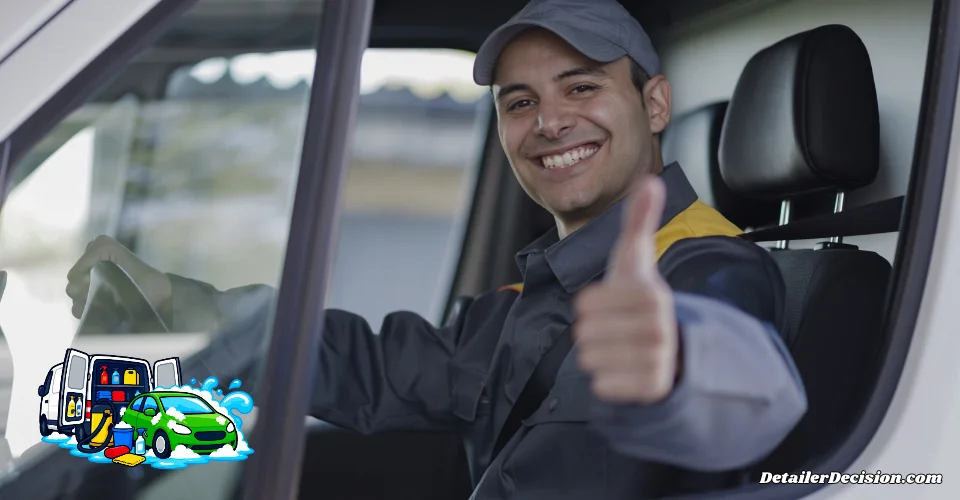
A mobile car detailing van can simplify your workday. Your pressure washer, vacuum, chemicals, towels, and hoses stay organized in one vehicle, ready for the next customer.
But buying a van doesn't automatically make your detailing business more profitable.
A used cargo van can cost thousands of dollars before you add a water tank, power source, hose reels, or storage system. And if you're just starting out, you might not need a dedicated van.
This guide explains which vans make sense for mobile detailers, what equipment you'll need, how much a setup can cost, and what to check before buying a used or fully equipped detailing van.
Do You Really Need a Mobile Car Detailing Van?
Quick answer: A dedicated detailing van is useful when you need secure equipment storage, faster setup and breakdown, or enough space for a self-contained water and power system. However, beginners can often start with an SUV, hatchback, or another vehicle they already own.
Mobile car detailing means traveling to a customer's location to clean and restore their vehicle instead of operating from a fixed shop. Depending on the services offered, you may need water, electricity, cleaning chemicals, a vacuum, and specialized detailing tools.
The vehicle you use should support those services without creating unnecessary expenses.
Consider three common situations:
| Your situation | Practical vehicle choice |
|---|---|
| Starting part-time with a limited budget | Existing SUV, hatchback, or suitable car |
| Running regular appointments with portable equipment | Compact cargo van |
| Offering higher-volume, self-contained services | Full-size cargo van with a properly engineered setup |
A discussion in the r/AutoDetailing community illustrates the trade-off.
One operator had been detailing from a paid-off hatchback for years. Although a van seemed more convenient, the discussion helped them recognize that better hose storage and equipment organization could solve much of the problem without adding a vehicle payment.
Worth remembering: sometimes the right upgrade is a hose reel, not a $20,000 van.
Best Vans for Mobile Car Detailing
No single detailing van is perfect. The right choice depends on your equipment, service volume, parking conditions, and whether you need to carry your own water.
1. Ford Transit Connect — Compact Setup
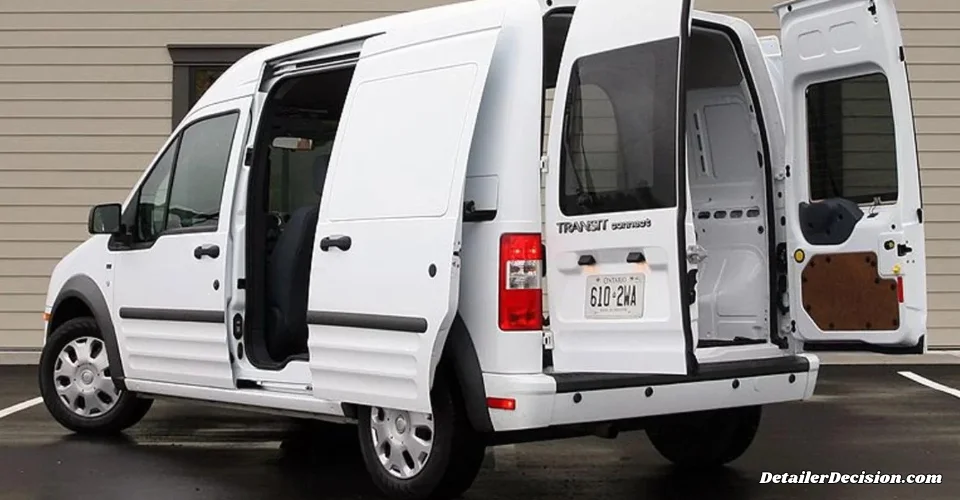
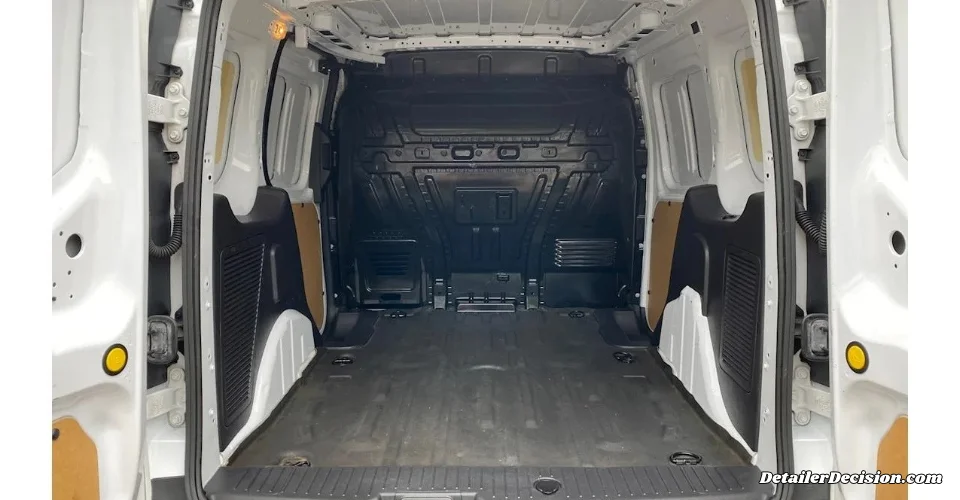
The Ford Transit Connect is a practical compact-van option to consider on the used market. It offers enclosed cargo space without the footprint of a full-size commercial van.
Best for: Solo detailers using portable equipment and relatively small water supplies.
Advantages include easier parking, a manageable cargo area, and enough space for a carefully planned equipment layout.
The main limitation is capacity. A compact van can become crowded once you add a tank, vacuum, pressure washer, generator, shelves, and cleaning supplies.
Ford discontinued the Transit Connect in the U.S. after the 2023 model year, so buyers should focus on condition, service history, and parts support rather than assuming a newer U.S. model is available.
2. Ford Transit — Full-Size Mobile Detailing Setup
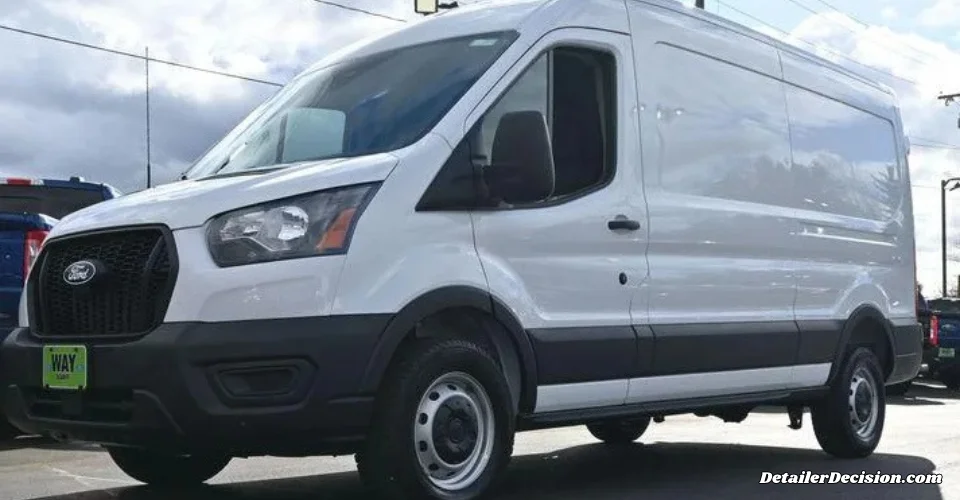
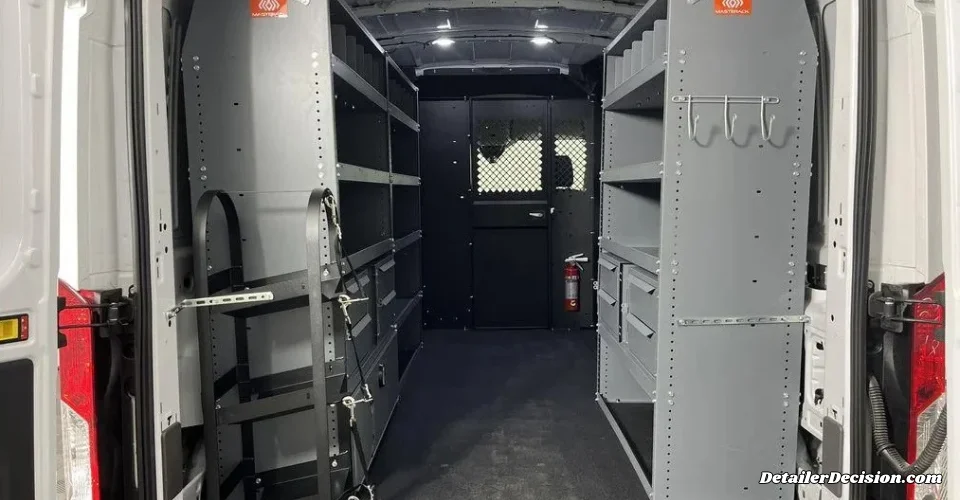
A full-size Ford Transit offers more room for dedicated equipment stations, storage racks, and water systems.
Best for: Established detailers who need a larger mobile workstation or plan to expand their services.
A properly designed layout can accommodate equipment without requiring you to unload everything at each appointment.
However, larger vans generally introduce higher vehicle costs, more demanding parking requirements, and additional build-out expenses.
Before purchasing, confirm the van's exact payload rating, cargo dimensions, roof height, and mechanical condition.
3. Ram ProMaster — Wide Cargo Area
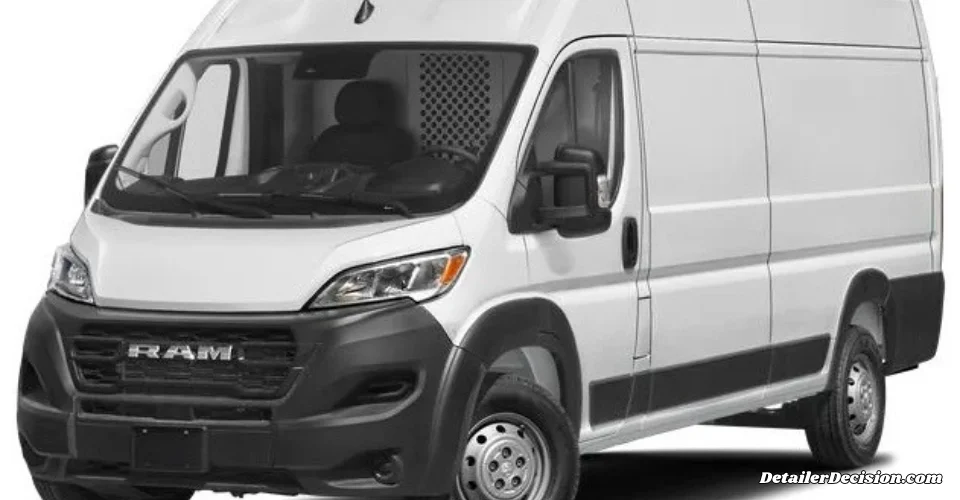
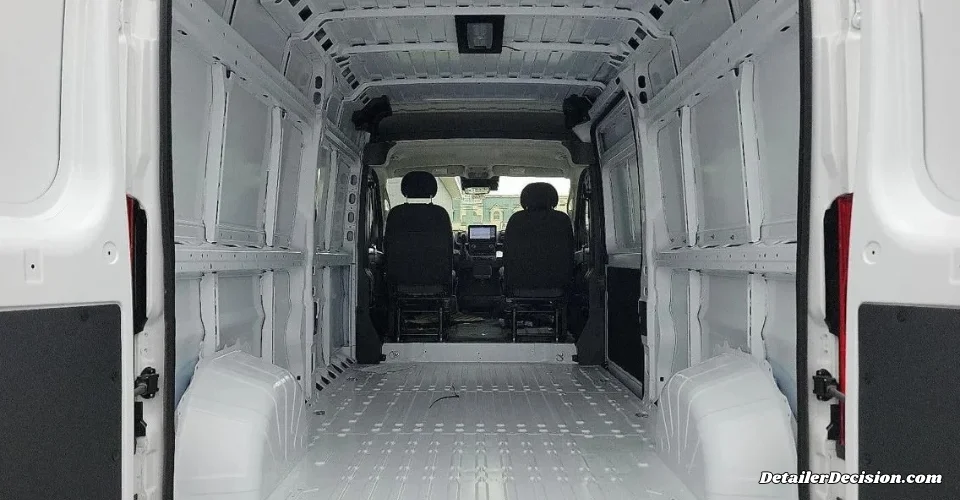
The Ram ProMaster is another full-size cargo van worth comparing.
Its cargo configuration can work well for shelving, tanks, and side-by-side equipment placement. Front-wheel drive and its relatively low cargo-floor design may also appeal to operators who frequently load and unload equipment.
Best for: Detailers planning a larger, more permanent mobile car detailing van setup.
The trade-offs are similar to other full-size vans: purchase price, maintenance, operating expenses, and the need to design a safe load arrangement.
Which Van Should You Choose?
| Vehicle | Main advantage | Main limitation |
|---|---|---|
| Ford Transit Connect | Compact and easier to park | Limited cargo and payload capacity |
| Ford Transit | More configuration and storage space | Larger footprint and higher overall costs |
| Ram ProMaster | Wide, configurable cargo area | Full-size operating and ownership costs |
| Existing SUV or hatchback | Avoids another vehicle purchase | Less room and potentially slower setup |
These are vehicle-class comparisons, not rankings based on independent road tests.
My recommendation for beginners: Start by listing the equipment you actually need. Then choose a vehicle that can safely carry it, rather than buying a van first and figuring out the equipment afterward.
Build Your Mobile Detailing Setup With Confidence
Find the right pressure washer, vacuum, chemicals, and tools for your budget—without buying what you don't need.
Build My Starter RigMobile Car Detailing Van Setup: Essential Equipment
Your van should make equipment accessible, secure, and easy to operate.
A good setup doesn't necessarily need expensive custom cabinetry. It needs a layout that works consistently.
Water Supply and Storage
A self-contained detailing van may require a water tank, pump, plumbing, and hose system.
However, tank size should depend on your actual water consumption and access to customer-supplied water.
Here is how much the water alone weighs:
| Water tank capacity | Approximate water weight |
|---|---|
| 30 gallons | 250 lb |
| 50 gallons | 417 lb |
| 75 gallons | 626 lb |
| 100 gallons | 834 lb |
| 140 gallons | 1,168 lb |
Calculated using approximately 8.34 lb per U.S. gallon. These figures exclude the tank, plumbing, mounting hardware, and other equipment.
A 100-gallon tank may sound convenient, but more than 800 pounds of water can consume a substantial portion of a van's available payload.
Do not choose tank capacity based only on available floor space.
Pressure Washer and Hose Reels
A pressure washer is common exterior detailing equipment. The right model depends on the services you offer, water supply, electrical availability, and intended workload.
Hose reels can reduce tangling and setup time, especially when mounted where you can reach them from the rear or side doors.
If you're planning your first equipment layout, see our mobile detailing equipment setup guide for additional planning considerations.
Vacuum and Interior Detailing Equipment
Interior detailing may require a wet/dry vacuum, brushes, towels, cleaners, and potentially an extractor or steamer.
A portable vacuum can be easier to replace and maintain than a permanently installed system. Secure it during transport, and keep the hose and attachments accessible.
Our mobile detailing equipment list for beginners helps distinguish essential tools from equipment you can add later.
Generator or Portable Power
Not every detailing van needs a generator.
If customers consistently provide suitable electrical access, you may be able to run on extension cords with appropriate electrical protection.
For independent operation, evaluate a generator or portable power system based on the actual equipment load.
Check running wattage, startup demand, manufacturer instructions, and whether multiple tools must operate simultaneously.
Never operate a fuel-powered generator inside the van or another enclosed or partially enclosed space. Carbon monoxide can accumulate quickly, and exhaust must be kept away from doors, windows, and air intakes.
Storage and Organization
A useful van layout should include secure locations for chemicals, towels, tools, and equipment.
Heavy equipment should be properly restrained. Chemicals need appropriate containment and protection from heat, spills, and incompatible materials.
For a broader purchasing checklist, review our mobile detailing business equipment guide.
How to Design a Practical Detailing Van Layout
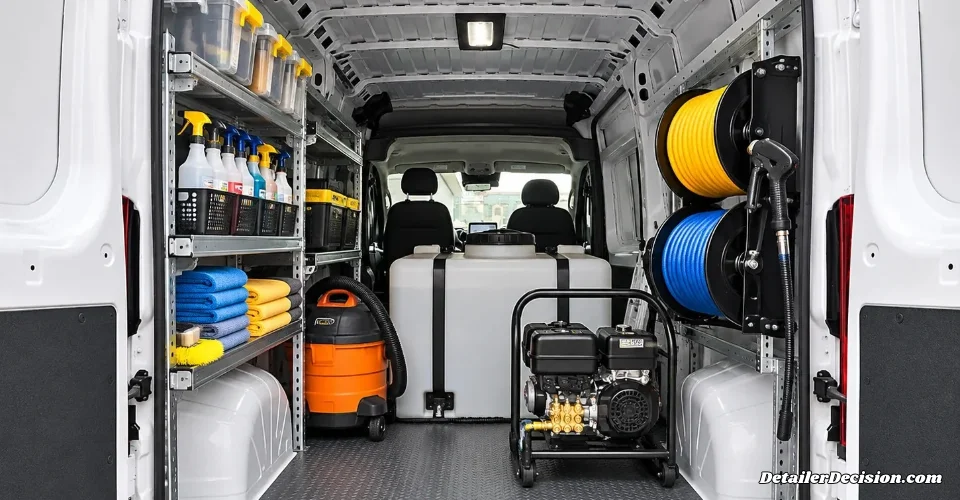
The best layout reduces unnecessary movement and keeps heavy equipment in safe positions.
Rather than copying a showroom-style build, organize your van around the order you work in.
A simple layout might look like this:
| Van area | Suggested equipment |
|---|---|
| Rear access | Pressure washer, hose reels, frequently used tools |
| Low, structurally suitable mounting area | Water tank and other heavy equipment |
| Side-door access | Vacuum, portable tools, chemical storage |
| Shelving and secured bins | Towels, brushes, bottles, accessories |
| Dedicated safe compartment or approved location | Power equipment and accessories |
This is a conceptual layout, not an engineered installation plan.
Keep Heavy Equipment Low and Secure
Do not place water tanks, generators, and other heavy items wherever they happen to fit.
Their location affects handling, braking, axle loading, and the ability to secure the cargo safely.
Use mounting hardware and restraint systems appropriate for the equipment and vehicle. For a substantial water tank or permanent installation, obtain qualified guidance rather than relying on improvised straps or shelving.
Make Frequently Used Tools Easy to Reach
If you have to unload five containers to reach your vacuum, improve the layout.
Keep everyday tools accessible from a door whenever practical. Store less frequently used supplies separately.
This approach can save effort without requiring expensive custom fabrication.
Plan for Ventilation and Chemical Safety
Keep chemical containers labeled and secured according to manufacturer instructions and safety data sheets.
Do not assume a cargo van's ordinary ventilation is sufficient for fuel-powered equipment or hazardous vapors.
Shut down and cool gasoline-powered equipment before transport, and handle fuel and equipment according to applicable safety requirements.
How Much Does a Mobile Car Detailing Van Cost?
A detailing van has two major cost components: the vehicle and the equipment installation.
The final amount can vary substantially based on vehicle condition, local market, equipment choices, and whether you do the work yourself.
Historical Purchase Examples From a Detailing Operator
In the supplied mobile detailing van buying video, a business operator described three Ford Transit Connect purchases.
| Vehicle | Reported purchase price | Reported build-out cost |
|---|---|---|
| 2015 Transit Connect | About $13,500 | Just under $10,000 |
| 2021 Transit Connect XLT | $21,000 | About $6,000 |
| 2020 Transit Connect XLT | $28,000 | Not yet completed |
The creator also reported wrap costs of approximately $3,500 for the first van and $3,200 for the second.
These are historical, self-reported examples from one business—not current market averages or verified retail quotations.
One particularly useful detail is that the second build-out cost less because the operator removed equipment that had proved unnecessary in the first setup.
That illustrates why starting with essential equipment can be more sensible than purchasing every possible accessory.
Don't Forget the Hidden Costs
The purchase price is only the beginning. A realistic budget should account for:
- Mechanical inspection, repairs, registration, taxes, and commercial auto insurance
- Tank mounting, shelving, electrical work, and equipment restraints
- Pressure washer, vacuum, hoses, reels, fittings, and power supply
- Maintenance, fuel, tires, and unexpected downtime
- Vehicle graphics or wraps, if justified by the marketing budget
For a more complete business-level breakdown, read how much it costs to start a mobile detailing business.
A Simple Van Purchase Budget Example
Consider this hypothetical scenario for a used cargo van:
| Expense | Planning assumption |
|---|---|
| Used van | $18,000 |
| Initial maintenance and repairs | $2,000 |
| Equipment and storage installation | $4,000 |
| Initial registration and related expenses | $1,000 |
| Illustrative initial total | $25,000 |
These are arithmetic planning assumptions, not researched 2026 dealer prices. Actual expenses may be significantly higher or lower, and the example excludes financing costs, ongoing insurance, and operating expenses.
The purpose is to show how quickly the total can exceed the advertised vehicle price.
Mobile Car Detailing Van for Sale: What to Check Before Buying
Searching for a mobile car detailing van for sale can lead to two very different kinds of listings: an ordinary used cargo van and a turnkey detailing vehicle.
A turnkey setup may include a tank, pressure washer, generator, hose reels, and storage.
That convenience can be valuable, but installed equipment should never replace a proper vehicle inspection.
Used Cargo Van vs. Turnkey Detailing Van
| Buying option | Advantages | Risks |
|---|---|---|
| Empty used cargo van | Customize the layout and equipment | Requires installation time and additional spending |
| Partially equipped van | May reduce setup work | Existing equipment may not fit your needs |
| Turnkey detailing van | Potentially ready for work sooner | Higher asking price and unknown installation quality |
Used Van Inspection Checklist
Before committing to a purchase, inspect the vehicle and the detailing system separately.
- Vehicle condition: Check maintenance records, mileage, corrosion, accident history, leaks, and drivetrain condition.
- Payload: Verify the specific vehicle's ratings and account for passengers, equipment, water, and supplies.
- Water system: Inspect the tank, mounts, plumbing, pumps, leaks, and winterization provisions.
- Electrical system: Verify wiring, protection, battery condition, generator operation, and equipment compatibility.
- Equipment condition: Test the pressure washer, vacuum, hose reels, and other included tools.
- Ownership and paperwork: Confirm title status, liens, applicable registration requirements, and whether equipment is included in the sale.
A pre-purchase mechanical inspection is worthwhile, particularly when considering a higher-mileage commercial vehicle.
For a used mobile detailing van setup for sale, also request photographs of the mounting hardware and wiring, not just the finished interior.
Where to Look for Used Detailing Vans
Potential places to research include commercial vehicle dealerships, local dealer inventory, established vehicle marketplaces, and business-equipment resale listings.
Compare asking prices with similar vehicles of the same year, mileage, condition, and configuration.
A van advertised as a complete detailing setup is not necessarily a better deal than an empty van. The value of the installed equipment depends on its condition, suitability, and installation quality.
The Most Important Calculation: Can Your Van Carry Everything?
A water tank is often one of the heaviest components in a self-contained detailing setup.
Before buying, calculate the weight of the fully loaded setup.
Example: 100-Gallon Water Tank Setup
Example weights for planning only. Tank hardware, equipment, and occupant weights must be replaced with actual measured or documented values. This tool does not verify vehicle payload or axle limits.
That means the vehicle would need sufficient available payload for approximately 1,484 pounds of additional load in this example.
The relevant payload capacity depends on the exact van configuration and installed modifications. Confirm the vehicle's ratings, including axle limits, rather than relying on a model-wide estimate.
If the loaded vehicle exceeds its allowable limits, you may need to reduce tank capacity or choose another vehicle.
Should You Buy a Van Now or Wait?
A dedicated van makes more sense when it solves an identifiable business problem.
You might be ready to upgrade if you regularly run out of cargo space, spend too much time unpacking equipment, need a safe self-contained water system, or have enough consistent work to justify the additional costs.
On the other hand, waiting may be the better choice if you are still testing demand, have a suitable paid-off vehicle, or don't yet know which equipment you need.
Calculate the Financial Impact
Suppose buying a van adds $650 per month in financing and incremental operating expenses.
If your contribution margin after variable job expenses is $125 per additional detail, the calculation is:
You would need approximately six additional details per month at that contribution margin to cover the added monthly cost.
This is a hypothetical calculation. It doesn't include every possible business expense or prove the van will generate those extra bookings.
The key question is whether the van will help you complete additional profitable work or deliver another measurable benefit worth its cost.
Build Your Detailing Equipment Setup Before Buying the Van
Buying equipment and buying a vehicle are connected decisions, but you shouldn't make them in the wrong order.
Start with your intended services, expected workload, and available budget. Identify the tools you need before choosing permanent storage and mounting locations.
If you're still comparing starter equipment, our mobile detailing startup kit guide explains equipment options for different beginner budgets.
Plan Your Equipment Before You Build Your Van
Not sure which pressure washer, vacuum, or supplies belong in your first setup? Use the DetailerDecision Starter Rig Builder to explore equipment options for your budget.
Stop Guessing. Start Building.
Not sure how to allocate your equipment budget? Explore starter equipment recommendations for $750, $1,000, or $1,500 before committing to purchases.
Explore Build My Starter RigCommon Mistakes When Building a Mobile Detailing Van
One common mistake is buying a large van before understanding your actual storage needs. Extra cargo space is useful, but it comes with ownership and operating costs.
Another is installing a large water tank without calculating the fully loaded weight. A tank's capacity is not just a convenience feature—it affects payload and vehicle handling.
Permanent equipment installations also deserve careful planning. Poorly secured tanks, unsuitable electrical wiring, and blocked access points can create safety problems and make maintenance difficult.
Finally, don't spend the entire budget on appearance. A professional wrap can support branding, but reliable equipment, safe operation, customer service, and a sound business plan should take priority.
Frequently Asked Questions about Mobile Car Detailing Van
What is the best van for mobile car detailing?
For compact setups, a used Ford Transit Connect may be worth considering. Full-size Ford Transit and Ram ProMaster vans provide more space for larger equipment installations. The best choice depends on payload, equipment dimensions, budget, and operating needs.
How much does a mobile car detailing van cost?
Costs vary widely. The supplied historical examples include used Ford Transit Connect purchases from approximately $13,500 to $28,000, excluding some build-out and operating expenses. These are not current market price estimates. Request up-to-date local quotes for the vehicle and installation.
Can you start a mobile detailing business without a van?
Yes. Some detailers operate from SUVs, hatchbacks, sedans, or pickup trucks. The vehicle must safely carry the required equipment, and the setup should match the services offered.
Is buying a used mobile detailing van setup worth it?
It can be, especially if the installed equipment suits your work and is in good condition. However, inspect the vehicle, equipment, mounting systems, and electrical installation before buying.
Do you need a water tank in a mobile detailing van?
Not always. Some operators use customer-supplied water or low-water cleaning methods. If you need to work independently of customer utilities, a tank may be useful, as long as the vehicle can carry it safely.
Final Recommendation
A mobile car detailing van should make your business more efficient—not simply more expensive.
For beginners, the best approach is often to start with an existing vehicle and a carefully selected equipment kit. As demand grows, a compact cargo van can offer better organization and protection.
For operators who need substantial water capacity, dedicated power, and permanent equipment stations, a full-size van may be the better long-term option.
Before purchasing, verify the vehicle's condition and payload, estimate the complete setup cost, and make sure the investment solves a real operating problem.
Choose the equipment your business needs first. Then choose the van that can safely carry it.